
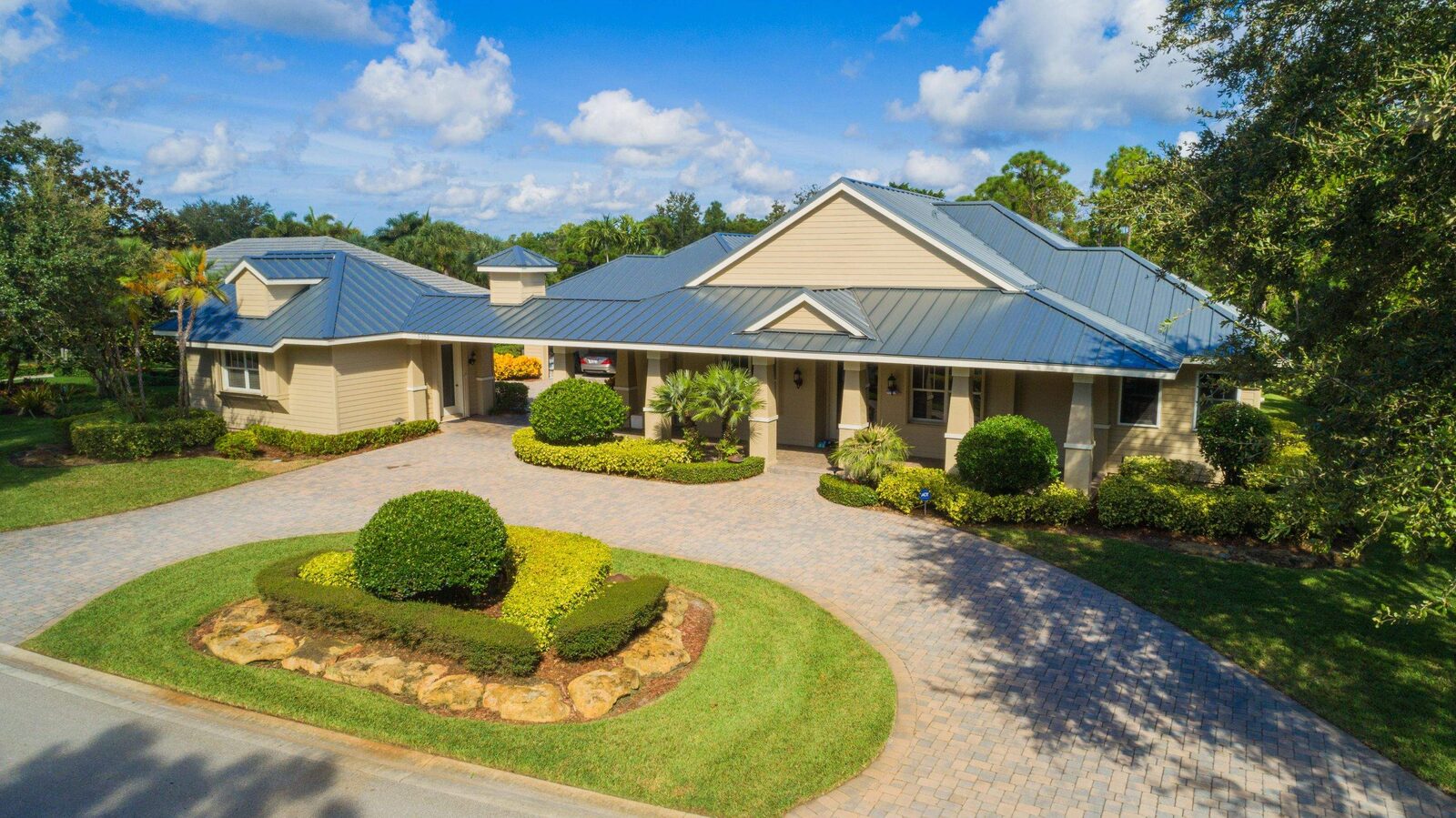
Overview
Overview of residential metal roofing substrate choices (bare/mill, Galvalume, aluminum) and factory-applied finish systems (unpainted mill finish, painted PVDF/Kynar 500, painted SMP, print-coated/textured stone-coated) used in the US residential market, including how Sherwin-Williams coil coatings (Fluropon/MetalVue) fit in.
Specifications
| Materials | Galvalume steel (55% aluminum / 43.5% zinc / 1.5% silicon coated steel), Galvanized steel (zinc-coated steel, G90/G60), Bare/mill-finish (unpainted) Galvalume or galvanized steel, Aluminum (bare mill finish or painted), Stone-coated (granule-coated) galvanized steel, Copper (bare, patina, or pre-weathered) - premium tier, Zinc (bare or pre-weathered) - premium tier |
|---|---|
| Profiles | Standing seam (mechanical or snap-lock), Exposed-fastener corrugated/R-panel, 5V-crimp, Metal shingle / shake panels (stamped, stone-coated), Metal tile / Spanish tile profile (stone-coated or painted), Metal slate profile |
| Gauge / thickness | Steel: 22 ga (~0.030"), 24 ga (~0.023"-0.024", industry standard/minimum for residential standing seam), 26 ga (~0.018", most common overall residential/light-commercial gauge), 29 ga (~0.014", lightest, used for low-cost exposed-fastener/agricultural panels, not recommended for standing seam). Aluminum roofing typically specified by decimal thickness (.032"-.040") rather than gauge. Coil coating (paint/PVDF or SMP film) is applied at roughly 0.2-1.0 mil dry film thickness on the coil before roll-forming. |
| Panel widths | Residential panels commonly run 12"-19" coverage width for standing seam (16" is a common default) and up to 36"-40" panel widths for exposed-fastener panels before coverage; coil stock is typically slit from 24"-48" master coils. |
| Material cost | $7–$30/sq ft |
| Lifespan | 30–70 yr |
| Wind rating | Standing seam systems with concealed clips commonly test to 120-180+ mph (UL 580/ASTM E1592 uplift testing); exposed-fastener panels generally rate lower than standing seam. Wind rating is driven by panel profile, gauge, clip spacing, and fastening pattern rather than by the substrate/finish choice itself. |
| Fire rating | Metal roofing assemblies are typically Class A fire-rated (the highest UL 790 rating) regardless of substrate or paint system, since steel/aluminum is noncombustible; rating is usually a function of the full assembly (deck, underlayment) rather than the coating itself. |
| Hail performance | UL 2218 Class 4 is the highest impact-resistance rating and is achievable by steel and aluminum panels of adequate gauge (typically 24 ga or heavier) regardless of paint system (PVDF or SMP); Class 4-rated metal roofs commonly qualify for homeowners-insurance premium discounts. PVDF coatings resist cracking/chipping on hail impact better than lower-grade polyester paints because the fluoropolymer film stays more flexible; thin-gauge (29 ga) exposed-fastener panels are more prone to hail denting/oil-canning than heavier standing-seam gauges. |
| Weight | Lightweight relative to most roofing materials: steel roofing panels weigh roughly 0.75-1.5 lb/sq ft depending on gauge, versus ~2.5-4 lb/sq ft for asphalt shingles and 6-10+ lb/sq ft for concrete tile or slate; aluminum is lighter still per given gauge; stone-coated steel is slightly heavier than bare painted steel due to the granule/acrylic coating layer but still far lighter than true stone, clay, or slate. |
| Fastener type | Concealed-fastener clips (standing seam, mechanically seamed or snap-lock, no exposed penetrations - preferred for factory-finish longevity since paint isn't punctured) or exposed neoprene-washered screws (corrugated/R-panel/5V, lower cost but fasteners are the primary long-term failure/leak point and typically need washer replacement every 15-20 years). |
Pros
- Galvalume substrate provides 2-4x the corrosion resistance of galvanized steel via a stable aluminum-oxide layer
- PVDF (Kynar 500/Fluropon) finishes hold color and resist chalking far longer than SMP - typically 30-40 year warranties vs 20-30 for SMP
- PVDF resin is softer/more flexible than SMP, resisting micro-fracturing during panel roll-forming that can expose bare metal
- All-metal roofing (any substrate/finish) is inherently Class A fire rated since the base material is noncombustible
- Class 4 UL 2218 hail resistance is achievable across substrates at adequate gauge, often unlocking insurance premium discounts
- Stone-coated finishes let homeowners get a wood-shake/slate/tile look with metal's durability and light weight, easing HOA/historic approval
- Concealed-fastener standing seam avoids puncturing the factory finish, extending effective coating life versus exposed-fastener panels
Considerations
- Bare/mill finish has no paint warranty and will visually dull/weather over time, which some homeowners find undesirable
- SMP finishes fade and chalk faster than PVDF and carry shorter finish warranties, though they cost less and resist abrasion/impact chipping in some formulations
- PVDF/Kynar systems and heavier gauges (22-24 ga) command a real cost premium over basic galvanized/29-ga exposed-fastener panels
- Exposed-fastener panel systems (regardless of substrate/finish) rely on gasketed screws that loosen/degrade and typically need washer replacement within 15-20 years, the most common metal-roof leak point
- Stone-coated finishes add manufacturing complexity/cost and can be harder to touch up or match if damaged compared to a smooth painted panel
- Galvanized (vs. Galvalume) substrate is now a minority choice (industry shifted 90%+ to Galvalume by the early 2000s), so galvanized options and matching replacement stock are less available for some profiles
- Thin-gauge (29 ga) panels, even with a premium PVDF finish, are more prone to hail denting and oil-canning than heavier gauges
Where Metal Roofing Substrates & Factory Finishes Overview performs best
Climates
- Coastal/humid (Galvalume + PVDF for corrosion + fade resistance)
- High-UV/sunbelt (PVDF for color/chalk retention, SR solar-reflective coatings for cooling)
- Hail-prone regions (Class 4 rated heavier-gauge panels, PVDF's crack/chip resistance)
- Freeze-thaw/snow-load regions (standing seam concealed-fastener systems shed snow and avoid fastener-related ice-dam leaks)
- Wildfire-prone regions (Class A fire rating inherent to all metal roofing)
Home Styles
- Modern farmhouse / barn style - bare or dark painted standing seam
- Contemporary/modern - smooth PVDF-painted standing seam in charcoal, black, or bronze
- Traditional/craftsman where HOA requires shingle-like appearance - stone-coated shake or dimensional shingle profiles
- Historic/heritage districts wanting a slate or tile look without the weight - stone-coated slate/tile profiles
- Coastal homes - Galvalume or aluminum substrate with PVDF finish
Sherwin-Williams Finish
Sherwin-Williams' MetalVue platform sits at the finish-system layer applied over Galvalume or galvanized steel (and aluminum) coil substrates before roll-forming. It offers two tiers: Fluropon (70% PVDF/Kynar-class fluoropolymer resin, AAMA 2605 rated, the premium long-term color/chalk-fade performance tier, including Fluropon SR solar-reflective and Fluropon Extreme abrasion-resistant variants) and WeatherXL (SMP-based, positioned as a tougher-against-abrasion/marring mid-tier alternative to standard PVDF for applications expecting rough handling). Both are coil-applied finishes, i.e. they compete directly with generic PVDF/SMP offerings from PPG (Duranar) and Valspar on Galvalume/galvanized/aluminum coil - the substrate choice (Galvalume vs. galvanized vs. aluminum) is independent of and complementary to the SW coating selection.
Look & Aesthetics
Bare/mill finish reads as a raw, industrial/farmhouse "tin roof" silver-gray look that weathers/dulls slightly over time (Galvalume) or can develop white rust staining (galvanized) - popular for barns, modern-farmhouse, and industrial-style homes. Painted PVDF/SMP finishes offer broad standard color palettes (charcoal, bronze, forest green, weathered copper tones, whites) with smooth, low-gloss to matte factory finishes and the most consistent long-term color uniformity (PVDF holds color/gloss noticeably better than SMP over 15-30 years). Print/textured finishes - primarily stone-coated steel with embedded stone granules - are used specifically to mimic wood shake, slate, clay tile, or dimensional shingle profiles for buyers who want a traditional roofscape silhouette with metal's durability; these have a matte, granular texture rather than a smooth painted sheen and are the go-to choice for HOA/historic-district approvals requiring a non-metallic appearance.
What Drives Installed Cost
2025-2026 installed costs vary heavily by substrate/finish tier: bare/mill-finish or basic galvanized corrugated exposed-fastener panels are the cheapest ($7-$10/sq ft installed material+labor, ~$1.50-$3.50/sq ft material only); mid-grade painted Galvalume R-panel/corrugated runs roughly $10-$14/sq ft; painted standing-seam steel with PVDF or SMP finish runs $10-$18/sq ft; aluminum runs $11-$17/sq ft; stone-coated steel shake/tile/slate profiles run comparably to premium standing seam; copper is the premium ceiling at $20-$40+/sq ft. Labor is roughly 60% of total installed cost, so substrate/finish choice moves material cost more than total installed cost proportionally.
Warranty
Two separate warranty tracks apply: (1) substrate/material warranty against perforation from rust-through - Galvalume typically 25-50+ years (often longer than galvanized's 20-30 years) due to 2-4x better corrosion resistance; some premium systems (e.g., Interlock aluminum) offer lifetime/50-year transferable material warranties. (2) Finish/paint warranty against fade, chalk, and film integrity - PVDF (Kynar 500/Hylar 5000/Fluropon) systems from coatings makers such as Sherwin-Williams, PPG, and Valspar typically carry 30-40 year color-and-chalk-fade warranties; SMP systems carry shorter finish warranties (commonly in the 20-30 year range) reflecting faster chalking/fading and greater risk of micro-fracturing during panel forming. Bare/mill-finish (unpainted Galvalume) has no paint warranty since there is no applied finish - its longevity depends solely on the metallic coating warranty.
Get matched with a certified MetalVue installer
Compare Metal Roofing Substrates & Factory Finishes Overview pricing and options with a free, no-obligation estimate.