
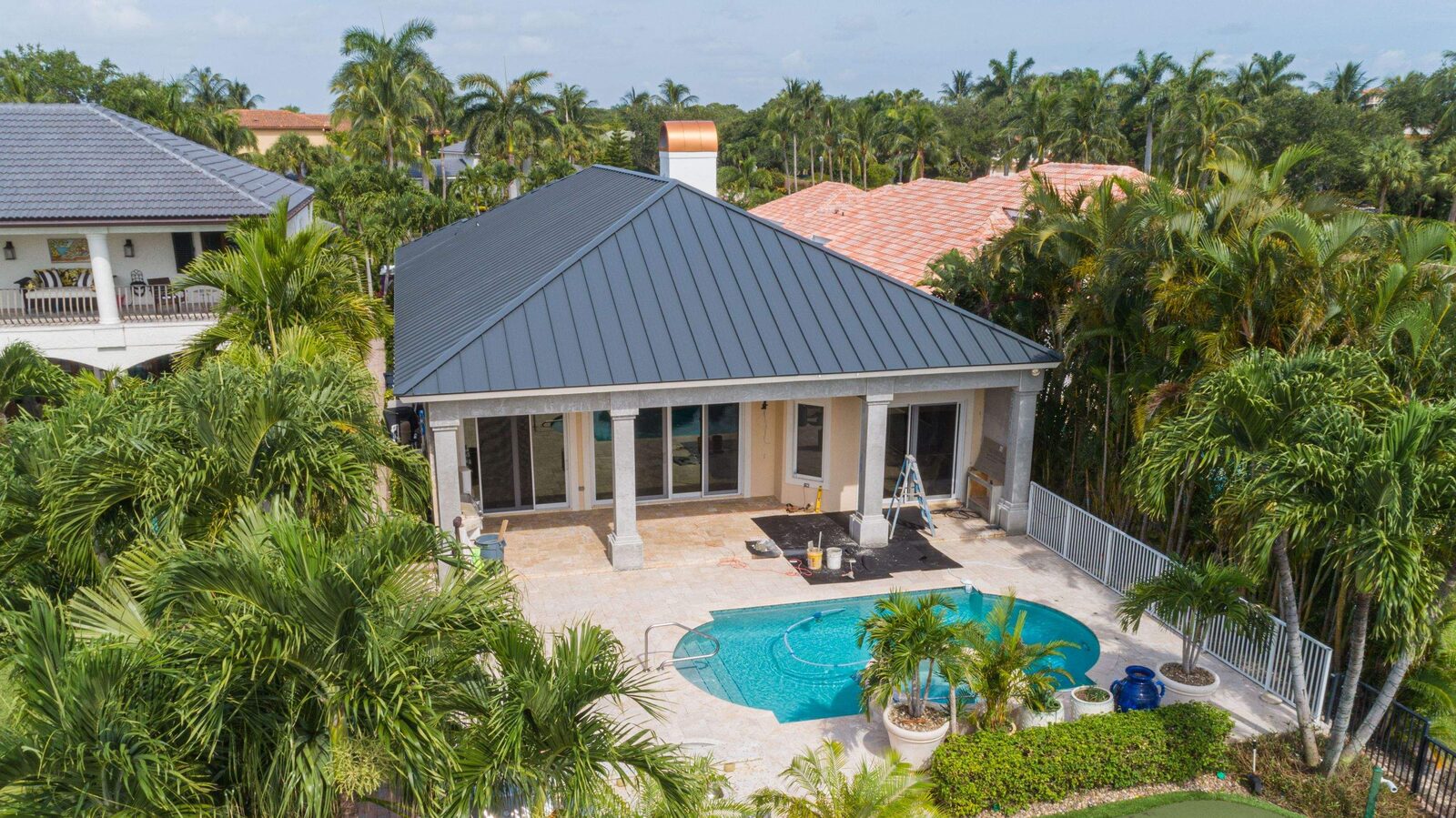
Overview
Comparison of the two dominant steel substrates used under residential metal roofing paint systems: traditional hot-dip zinc-coated (galvanized, e.g. G90) steel versus aluminum-zinc alloy-coated (Galvalume/Zincalume/Zincalume Plus, e.g. AZ50/AZ55) steel.
Specifications
| Materials | Galvanized: cold-rolled carbon steel, hot-dip coated with ~99%+ pure zinc (G-designations: G30, G40, G60, G90, G100 = coating weight in hundredths of oz/sq ft on both sides combined), Galvalume/Zincalume: cold-rolled carbon steel, hot-dip coated with an aluminum-zinc-silicon alloy, approximately 55% aluminum / 43.4-43.5% zinc / 1.5-1.6% silicon (AZ-designations: AZ50 = 0.50 oz/sq ft, AZ55 = 0.55 oz/sq ft, both sides combined) |
|---|---|
| Profiles | Standing seam (mechanically seamed or snap-lock), 5V-crimp, Corrugated (7.2 panel, R-panel style), Exposed-fastener ribbed/screw-down panels, Metal shingle/shake profiles |
| Gauge / thickness | 22-29 gauge (0.014\"-0.034\"); residential roofing predominantly 24 gauge (0.024\", premium) or 26 gauge (0.019\", standard/most common); 29 gauge is a lighter-duty/budget option, less common for standing seam |
| Panel widths | Coil widths typically 24\"-48\" slit to panel coverage widths of 12\"-19\" (standing seam) or up to 36\" (corrugated/ribbed); residential coil-coated stock commonly run at 24\" or 36\" master coil width |
| Material cost | $5–$15/sq ft |
| Lifespan | 20–70 yr |
| Wind rating | Systems tested to UL 580/UL 1897 and ASTM E1592; standing-seam steel systems commonly rated Class 90 (UL 580) and engineered/tested to 120-150+ mph depending on panel profile, clip spacing, and deck attachment; exact rating is system- (not substrate-) dependent |
| Fire rating | Class A (the highest, non-combustible) when installed per code over an approved deck/underlayment assembly - true of steel roofing generally regardless of galvanized vs Galvalume substrate |
| Hail performance | Both substrates share the same steel core strength; 24-gauge (or thicker) panels commonly achieve UL 2218 Class 4 impact resistance, the highest rating, which can qualify for insurance premium discounts in many states; thinner 29-gauge panels are more prone to cosmetic denting; coating type (galvanized vs Galvalume) has negligible effect on dent resistance versus gauge/thickness, which is the primary driver |
| Weight | Light: roughly 0.6-0.8 lb/sq ft for 29 gauge, ~0.9-1.0 lb/sq ft for 26 gauge, ~1.1-1.2 lb/sq ft for 24 gauge (bare steel weight; add ~1-2 oz for coating/paint film) - among the lightest roofing options, well under asphalt shingles (~2-4 lb/sq ft) or tile/slate |
| Fastener type | Standing seam: concealed clips (no panel penetrations); exposed-fastener/corrugated panels: hex-head or gasketed woodgrip screws with EPDM/neoprene sealing washers, typically stainless or coated to match substrate to avoid galvanic reaction |
Pros
- Galvalume/Zincalume: 2-4x better overall corrosion resistance than G90 galvanized in most inland atmospheric exposure tests, due to combined zinc sacrificial + aluminum barrier protection
- Galvalume: superior cut-edge and scratch 'self-healing' performance versus galvanized over long exposure
- Galvalume: better heat/solar reflectance than galvanized, aiding energy efficiency (relevant to SW MetalVue cool-roof positioning)
- Galvalume: longer typical substrate warranties (25.5 years standard, up to 40-60 years on some current mill programs) versus 20-30 years for G90
- Galvanized (G90): superior performance specifically in high-ammonia/livestock-confinement environments where Galvalume can react poorly
- Galvanized: brighter, shinier bare appearance if an unpainted, reflective look is desired
- Both: steel core gives Class A fire rating, strong hail/impact performance at 24 ga+, fully recyclable, compatible with standing-seam and exposed-fastener systems
- Both: readily accept Sherwin-Williams PVDF/SMP coil coatings for the full range of MetalVue color/finish options
Considerations
- Galvalume: not recommended for immediate coastal/salt-spray zones - aluminum roofing or heavier specialty coatings are preferred within roughly 1,500 ft-3 miles of saltwater
- Galvalume: incompatible with direct contact to livestock waste/ammonia (except poultry) and with copper, lead, or treated lumber without an isolating underlayment/flashing (galvanic corrosion risk)
- Galvanized (G90): corrodes faster than Galvalume in humid, coastal, and industrial atmospheres; zinc layer sacrifices/erodes over time at a faster rate than Galvalume's alloy layer
- Galvanized: shorter typical lifespan (15-30 years bare; up to ~50 with paint) versus Galvalume's 40-70 years in favorable conditions
- Bare/unpainted panels of either substrate can show visible mottling, spangle, or oil-canning on wide flat panels; painted MetalVue panels largely mitigate this
- Coating type (AZ50 vs G90) has no meaningful effect on hail/dent resistance - that is driven by gauge, so it should not be oversold as a hail-performance differentiator
Sherwin-Williams Finish
Sherwin-Williams industrial coil coatings (Fluropon 70% PVDF/Kynar-type and SMP systems) are formulated for and routinely applied over both Galvalume and hot-dip galvanized (HDG) steel coil, as well as aluminum, after cleaning/pretreatment and primer. For MetalVue-style painted residential panels, the choice of Galvalume vs. galvanized as the base substrate is largely invisible to the homeowner once painted - the PVDF/SMP topcoat governs color retention, chalk/fade resistance, and warranty length, while the underlying metallic coating (AZ50/G90) governs long-term cut-edge and scratch corrosion resistance. Sherwin-Williams' published guidance favors Galvalume as the substrate of choice for non-agricultural, non-marine residential applications given its superior cut-edge self-healing and longevity, reserving heavier galvanized (G90/G100) for livestock/agricultural buildings.
What Drives Installed Cost
Installed (material + labor) costs for both substrates run roughly $5-$15/sq ft depending on gauge, profile, region, and finish; Galvalume/Zincalume typically carries a 5-20% material premium over equivalent-gauge G90 galvanized, though the two have historically traded places in raw-material pricing. As of Q1-Q2 2026, 22-gauge G90 raw coil runs approximately $0.85-$1.10/lb, with 26-gauge AZ55 Galvalume priced within about 5-10% of G90. Premium PVDF (Kynar 500/Fluropon) paint finishes add roughly $1-2/sq ft over either bare or SMP-painted substrate.
Warranty
Substrate ("perforation"/rust-through) warranties: galvanized G90 typically 20-30 years; Galvalume/Zincalume typically 25.5 years standard, with some mills now extending 40-60 year substrate warranties on Galvalume coil. Paint-film warranties (20-40 years for PVDF/Kynar 500 systems, 10-20 years for SMP) are separate and depend on the topcoat, not the substrate - painted Galvalume or painted galvanized under a quality PVDF system commonly carries combined 30-40+ year system warranties from fabricators.
Get matched with a certified MetalVue installer
Compare Steel Substrate: Galvanized vs. Galvalume/Zincalume/Zincalume Plus (G90 vs AZ50/AZ55) pricing and options with a free, no-obligation estimate.