
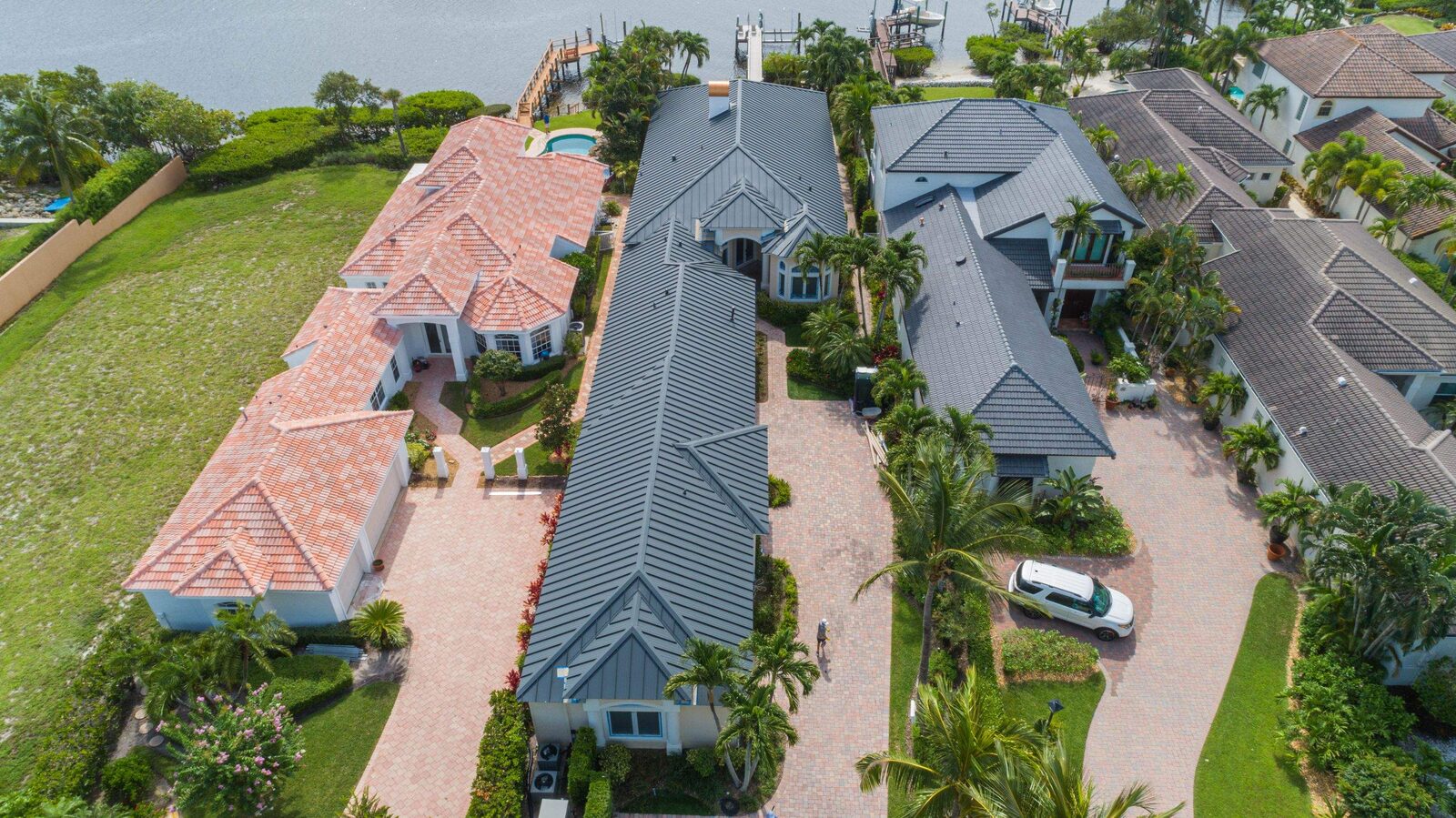
Overview
Stone-coated steel roofing consists of a Galvalume or zinc-galvanized steel base panel, stamped and formed into interlocking sections that replicate the profile of tile, wood shake, or asphalt/wood shingles, then coated with an acrylic-bonded layer of crushed stone or ceramic granules for color, texture, and UV/impact protection. Panels interlock and use a largely concealed fastening system (fasteners driven through the panel and covered by the overlapping course above), producing a continuous, wind-resistant surface. Major US residential brands include DECRA (Shake XD, Shingle XD, Tile, Villa Tile), Gerard Roofing (now part of the TAMKO/Metrotile family in some regions), Metro Roof Products/Boral Steel, and Tilcor. The category targets homeowners who want the traditional dimensional look of shingles, shakes, or barrel tile combined with the durability, Class 4 impact resistance, and long service life of steel — commonly marketed as a premium, storm-resistant alternative to asphalt shingles, wood shake, and clay/concrete tile.
Specifications
| Materials | Galvalume steel (zinc-aluminum coated) or galvanized steel base panel, Acrylic bonding/basecoat layer, Natural crushed stone or ceramic-coated granules (color/texture layer), Clear acrylic overglaze/topcoat for UV and granule adhesion protection |
|---|---|
| Profiles | Tile / barrel tile (Spanish/Mediterranean clay-tile look), Shake (wood shake simulation, dramatic shadow lines), Shingle (dimensional asphalt/wood-shingle look), Villa/premium tile (Spanish/Italian tile profile variants) |
| Gauge / thickness | Typically 24-28 gauge steel depending on brand/product line; premium hurricane-rated products (e.g., DECRA Shake XD) use 26 gauge. Some sources describe metric substrate thickness of roughly 0.40-0.50 mm for coastal/high-wind-rated products. |
| Panel widths | Individual stamped panels commonly around 52-53 inches long by roughly 14-15 inches wide (e.g., ~52 5/8 in x 14 9/16 in cited for one shingle-profile product), each panel typically simulating multiple shingles/shakes/tiles; roughly 18-20 panels per roofing square depending on product and profile. Panel geometry and coverage vary by manufacturer and profile (tile, shake, shingle). |
| Material cost | $7–$15/sq ft |
| Lifespan | 40–70 yr |
| Wind rating | Commonly rated to withstand approximately 120 mph winds as a baseline across major brands, with some products/installations rated up to 150 mph; select products (e.g., DECRA Shake XD) carry Florida Building Code and Miami-Dade Hurricane Zone approval plus UL 90 wind uplift testing and Texas Windstorm approval. |
| Fire rating | Class A (highest) when installed as part of a tested assembly (steel substrate is non-combustible); commonly cited for wildfire-prone building codes. |
| Hail performance | Class 4 UL 2218 impact rating (highest class) is standard across major stone-coated steel product lines — withstands a 2-inch steel ball dropped from 20 ft without fracture/penetration; some manufacturers test/market resistance to hail up to ~2.5 inches. This often qualifies homeowners for insurance premium discounts in hail-prone states (subject to insurer/state rules). |
| Weight | Lightweight for a "heavy-look" roofing category: approximately 1.4-2 lbs per square foot (roughly 140-150 lbs per roofing square), substantially lighter than clay or concrete tile (9-12 lbs/sq ft) though somewhat heavier than flat standing-seam steel or aluminum panels. |
| Fastener type | Primarily concealed fastening: screws/nails are driven through the top (head lap) portion of each panel and hidden beneath the overlapping course above, with panels also mechanically interlocking side-to-side (tongue-and-groove style locks) for wind resistance. Some accessory/trim pieces (ridge caps, hip caps, starter strips, flashing) use exposed, gasketed fasteners. Installation is typically over solid decking with synthetic or felt underlayment, sometimes battens/counter-battens depending on manufacturer and climate (battens common in high-snow or ventilation-focused installs). |
Pros
- Highest hail impact rating available (Class 4 UL 2218) — among the best roofing materials for hail-prone regions
- High wind resistance, roughly 120 mph standard with some products rated 150+ mph and hurricane-zone (Miami-Dade/Florida) approvals
- Class A fire rating from non-combustible steel construction
- Long service life, roughly 40-70 years depending on brand, often exceeding the underlying home's other systems
- Strong warranties: commonly 50-year limited material warranties (some brands offer lifetime/transferable coverage) and separate coating warranties (e.g., ~25 years) from major manufacturers
- Much lighter than clay or concrete tile (roughly 1.4-2 lbs per sq ft vs. 9-12 lbs/sq ft for concrete tile), enabling retrofit over existing structures with minimal/no reinforcement
- Low maintenance — resists cracking, curling, warping, and rot compared to asphalt or wood shake
- Replicates the traditional dimensional look of shingles, shakes, or tile while providing metal-roof durability
- Concealed/interlocking fastening reduces exposed penetration points and improves wind uplift performance versus some exposed-fastener panel systems
Considerations
- Higher material and installed cost than asphalt shingles and most standing-seam steel per square foot
- Requires specialized/certified installers; improper install (fastening, underlayment, flashing) can cause leaks and void warranties — not every roofing contractor is experienced with the system
- Can be noisy in heavy rain/hail without solid decking and proper underlayment/insulation
- Heavier than standing-seam steel or aluminum panels (though far lighter than clay/concrete tile), so some structural check is still warranted on older framing
- Stone granule coating can chip, scratch, or shed granules over decades, and colors can fade with prolonged UV/weather exposure
- More complex panel/tile geometry than flat panels means more cut waste and higher labor time on complex roof lines (hips, valleys, dormers)
- Repairs/replacement of individual damaged panels can be harder to color-match on older installations
- Not a good substrate for Sherwin-Williams coil/liquid coatings since the visible finish is embedded stone granules rather than a paint film
Where Stone-Coated Steel Roofing (Tile, Shake, and Shingle Profiles) performs best
Climates
- Hail-prone / severe convective storm regions (Class 4 impact resistance)
- Hurricane and high-wind coastal zones (120-150+ mph rated systems)
- Wildfire-prone areas (Class A fire rating, non-combustible steel core)
- Heavy snow-load regions (interlocking panels shed snow, rated for structural loads)
- Hot/sunny climates where a non-reflective, low-glare finish is preferred over reflective bare-metal panels
Home Styles
- Traditional/colonial homes wanting a shingle look with metal durability
- Spanish/Mediterranean and Southwestern homes (barrel tile profiles)
- Craftsman, rustic, mountain, and cabin homes (wood shake profiles)
- Historic-district and HOA-restricted homes requiring a non-metallic visual appearance
- Older homes needing retrofit over existing roofs without heavy structural reinforcement (much lighter than concrete/clay tile)
Sherwin-Williams Finish
Low direct fit. Stone-coated steel's visible finish is a factory-applied crushed-stone/ceramic-granule layer bonded with acrylic, not a liquid coil coating — so premium SW coil/extrusion systems (Fluropon PVDF, WeatherXL, SMP) are not applied to the weather-exposed face the way they are on flat standing-seam or exposed-fastener panels. Potential SW touchpoints are narrower: substrate-side galvanized/Galvalume steel primers, backer coats, or field touch-up/repair paint for cut edges and fasteners, and possibly clear protective topcoat chemistry parallels. For MetalVue's product strategy, this category competes on granule-coating durability/warranty rather than on SW's coating differentiation, so it is a weaker fit than flat panel or standing-seam categories for a coatings-led value proposition.
Look & Aesthetics
Stone-coated steel is the closest metal-roofing category to a "no compromise" traditional look: individual stamped panels (interlocking multi-shingle/multi-tile/multi-shake sections) create shadow lines, staggered coursing, and 3-D texture that flat standing-seam panels cannot replicate. The factory-applied stone (crushed rock/ceramic granule) coating is embedded in an acrylic bonding layer, giving a matte, non-reflective, granular finish similar to laminated asphalt shingles, clay tile, or cedar shake — a strong fit for HOA-restricted or historic-district homes where a metallic sheen is undesirable. Color is baked into the granules (not a topcoat), so color options are more limited/discrete (typically 8-20 blended/multi-tone colorways per line) than the near-infinite custom-match palette available on painted flat/standing-seam steel or aluminum. Because the color medium is embedded stone rather than a liquid coating, Sherwin-Williams' coil/extrusion coating systems (e.g., Fluropon, WeatherXL, SMP) are not directly applicable to the exposed weather face — SW's relevant role is generally limited to any factory-applied steel substrate primer/backer coat or field touch-up paint for cut edges, not the visible finish.
What Drives Installed Cost
Material typically runs about $4-11 per sq ft; labor adds roughly $3-8 per sq ft; tear-off/disposal of old roofing adds about $2-4 per sq ft. Fully installed, a 2,000 sq ft roof commonly totals about $17,000-35,000 (some sources cite $18,500-31,000), with cost driven mainly by roof size, pitch/complexity, and regional labor rates.
Warranty
Material warranties are typically the strongest in the metal roofing category: commonly 50-year limited (material) warranties across major brands (DECRA, Boral Steel, Gerard/Metrotile), with DECRA also offering a lifetime limited warranty option and transferability to subsequent homeowners (DECRA cites up to 20 years transferable coverage). Coating/finish (granule) warranties are typically shorter and separately stated, often around 25 years, covering color/finish degradation distinct from the structural material warranty. Homeowners should confirm hail/impact damage coverage terms, transferability, and labor coverage, which vary by manufacturer and installer certification status.
Get matched with a certified MetalVue installer
Compare Stone-Coated Steel Roofing (Tile, Shake, and Shingle Profiles) pricing and options with a free, no-obligation estimate.